



Digital and Technical Skills
In today’s tech-driven world, digital skills are no longer optional—they are essential. Employers across Europe are seeking professionals who can:
- Develop software and applications (Python, Java, JavaScript)
- Analyze data using tools like Excel, SQL, Power BI, or Tableau
- Work with cloud platforms and cybersecurity solutions
- Understand AI, machine learning, and automation
Language and Communication Skills
While English is commonly used in many European workplaces, learning the local language can be a huge advantage:
- German – Germany, Austria, Switzerland
- French – France, Belgium, Luxembourg
- Spanish – Spain
Additionally, strong communication skills—both verbal and written—are essential for teamwork, presentations, and networking.
Soft Skills and Adaptability
Employers in Europe highly value professionals who can adapt to different work cultures and collaborate effectively. Important soft skills include:
- Critical thinking and problem-solving
- Teamwork and collaboration
- Time management and organization
- Cultural awareness and flexibility
Fun Fact: Professionals who show adaptability and a willingness to learn often get promoted faster.
Industry-Specific Skills
Depending on your field, specialized skills can make you more attractive to employers:
- Healthcare: Medical certifications, patient care, research expertise
- Engineering: CAD design, project management, quality assurance
- Finance: Risk management, auditing, compliance knowledge
Creative Fields: UX/UI design, digital marketing, content creation
Continuous Learning and Networking
Europe encourages lifelong learning. Staying updated through certifications, online courses, or workshops keeps you ahead in your career. Networking—both online and offline—also opens doors to opportunities:
- Join LinkedIn groups and professional communities
- Attend local seminars or meetups
- Connect with alumni or mentors in your field
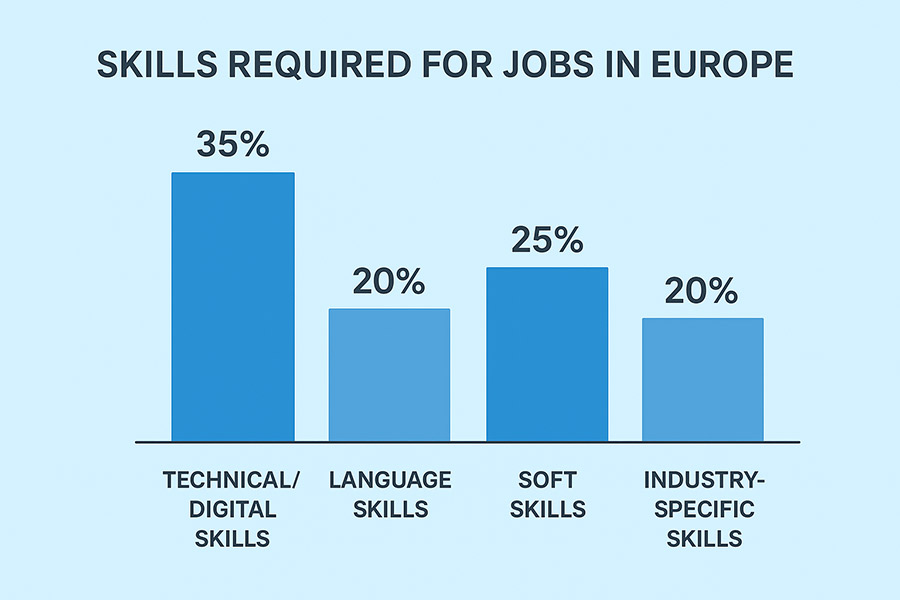
Visual Idea: Skills Demand Graph
You can include a simple bar chart or pie chart showing the most in-demand skills in Europe by percentage. For example:
Final Thoughts
Landing a job in Europe requires the right mix of technical expertise, soft skills, and adaptability to diverse work environments. By continuously learning and networking, you can enhance your employability and achieve your career goals.
