Europe is a land of diversity, with over 40 countries and hundreds of languages. Whether you plan to work, study, or travel, learning a local language can transform your experience. Here’s why it matters.
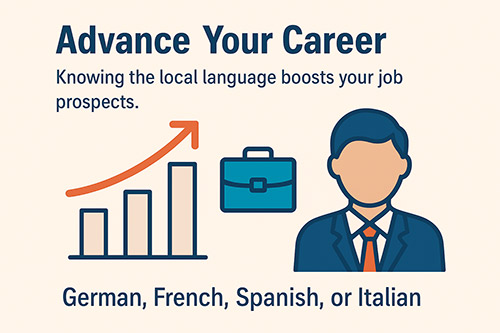
Advance Your Career
Knowing the local language boosts your job prospects. Multilingual professionals are in high demand, and speaking German, French, Spanish, or Italian can open doors to leadership roles or international projects.
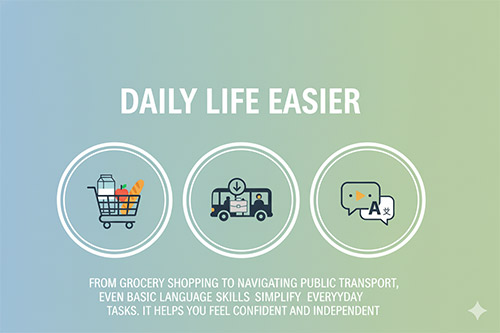
Make Daily Life Easier
From grocery shopping to navigating public transport, even basic language skills simplify everyday tasks. It helps you feel confident and independent.
Connect with Local Culture
Language is the gateway to understanding traditions, festivals, and social norms. It allows you to experience authentic European life beyond tourist spots.
Build Social Connections
Learning the language helps you make friends, join communities, and feel at home. Locals appreciate the effort, making integration smoother.
Boost Brain Power
Learning a language improves memory, problem-solving skills, and creativity—benefits that extend to your personal and professional life.
Enhance Travel Experiences
Europe is full of hidden gems. Knowing the local language lets you explore off-the-beaten-path destinations and interact more meaningfully with locals.
Top Languages to Learn in Europe
English – Widely spoken across the continent.
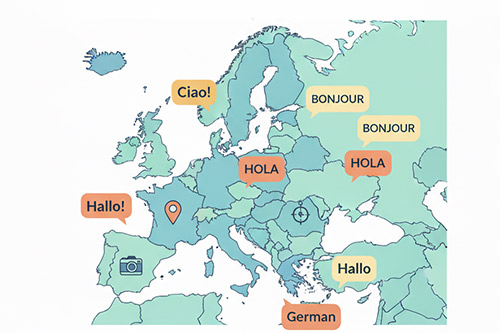
German – Important for business and central Europe.
French – Useful in France, Belgium, Switzerland, and parts of Africa.
Spanish – Spoken in Spain and many international communities.
Italian – Key for culture, tourism, and lifestyle in Italy.
Final Thoughts
Learning a language in Europe is more than communication—it’s opportunity, connection, and growth. Start small, stay consistent, and enjoy every step of your multilingual journey.